
Introduction
The global pharmaceutical supply chain is increasingly affected by the rapid expansion of counterfeit and substandard drug products. With the evolution of sophisticated falsification techniques, counterfeit medicines now closely resemble authentic pharmaceutical products in terms of appearance, labeling, and even chemical composition. This high level of imitation makes detection difficult not only for patients but also for healthcare professionals, including physicians and pharmacists.
According to the World Health Organization, counterfeit drugs are defined as medicinal products that are deliberately and fraudulently mislabeled with respect to identity, composition, or source. These falsified medicines often referred to as Spurious, Falsely-labeled, Falsified, and Counterfeit (SFFC) drugs may contain:
- The correct active pharmaceutical ingredient (API) but produced under poor manufacturing conditions
- Incorrect or substituted ingredients
- No API at all
- Subtherapeutic levels of API
- Misleading or falsified packaging
A particularly dangerous scenario arises when counterfeit drugs contain insufficient API. This is especially critical in antimicrobial therapies, where underdosing can accelerate the emergence of drug-resistant pathogens, posing a serious public health risk.
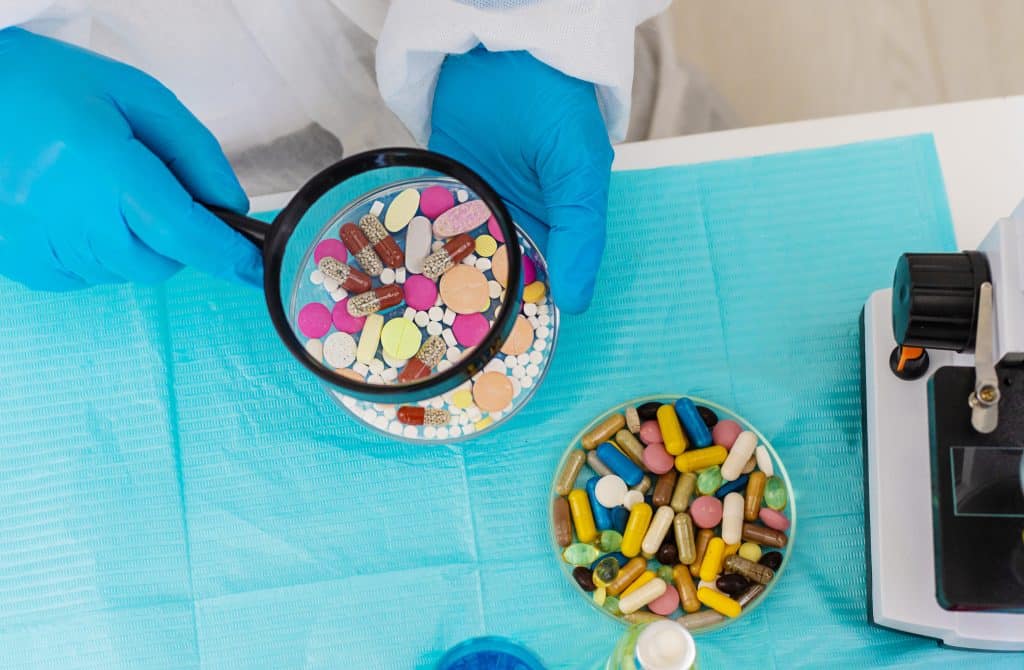
Conventional vs Rapid Detection Approaches
Limitations of Traditional Detection Methods
Traditional methods used to detect counterfeit drugs can be broadly categorized into:
- Visual inspection techniques (packaging verification, labeling features)
- Laboratory-based chemical analysis
Visual methods often rely on security features such as holograms, special inks, or encoded markings. Regulatory agencies like the U.S. Food and Drug Administration have developed portable tools using multi-wavelength light sources to support field inspections.
Chemical analysis techniques include:
- Liquid chromatography–mass spectrometry (LC-MS)
- Near-infrared spectroscopy (NIR)
- Raman spectroscopy
- X-ray fluorescence (XRF)
- Ion mobility spectrometry (IMS)
Although highly accurate, many of these techniques require extensive sample preparation, specialized equipment, and trained personnel, limiting their use in real-time or field conditions.
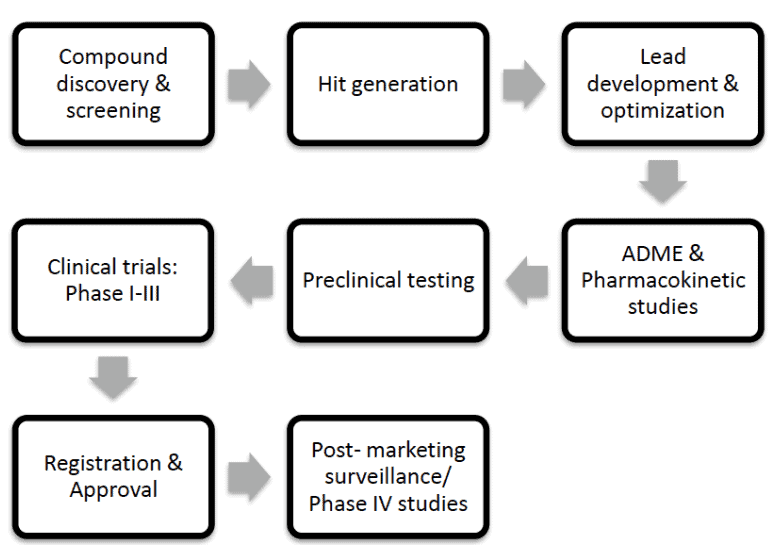
Emerging Rapid Drug Detection Technologies
Recent advancements focus on fast, portable, and non-destructive analytical techniques that enable rapid screening and identification of counterfeit drugs. These technologies are designed to complement traditional laboratory methods and improve detection efficiency in both clinical and field settings.
Spectroscopy-Based Detection Methods
Near-Infrared Spectroscopy (NIRS)
Near-infrared spectroscopy is a widely adopted analytical tool in pharmaceutical quality control. It operates within the spectral region between visible and mid-infrared light and enables rapid, non-destructive analysis of complex samples.
Advantages
- Minimal or no sample preparation
- Fast data acquisition
- Non-invasive measurement
- Capability for multi-component analysis
NIRS has proven effective in identifying counterfeit drugs using chemometric models such as Principal Component Analysis (PCA) and Soft Independent Modeling of Class Analogy (SIMCA). These statistical approaches allow differentiation between authentic and falsified products based on spectral fingerprints.
Additionally, mobile NIR-based systems have been developed for field deployment, particularly in rural or resource-limited settings, enabling on-site drug screening.
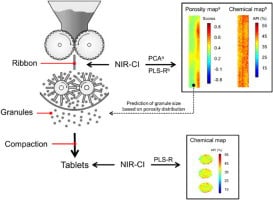
Near-Infrared Chemical Imaging (NIR-CI)
NIR-CI extends traditional spectroscopy by integrating spatial imaging with chemical analysis. This technique allows visualization of the distribution of active and inactive components within pharmaceutical formulations.
Applications:
- Detection of counterfeit tablets
- Evaluation of drug homogeneity
- Identification of manufacturing inconsistencies
Compared to single-point NIRS, NIR-CI offers superior analytical performance by providing both chemical and spatial information, making it highly effective for complex counterfeit detection scenarios.
Raman Spectroscopy
Raman spectroscopy is another powerful, non-destructive analytical technique that provides a unique molecular “fingerprint” of substances based on light scattering properties.
Features:
- No sample preparation required
- Ability to analyze through packaging
- High specificity for molecular identification
Portable Raman devices are increasingly used for field applications, enabling rapid screening of pharmaceuticals without compromising sample integrity.
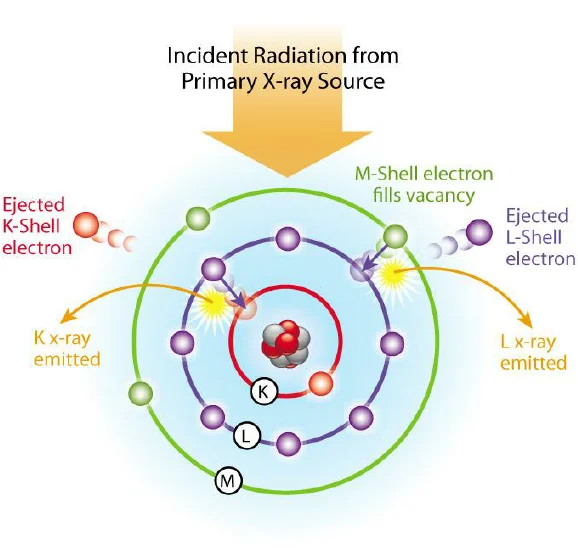
X-ray Fluorescence (XRF)
XRF is used to detect and quantify elemental composition, particularly metals and inorganic compounds within drug formulations.
Advantages:
- Multi-element detection
- High precision and sensitivity
- Rapid and non-destructive analysis
This technique is particularly useful for identifying excipients and coating materials, which can differ significantly between authentic and counterfeit drugs.
X-ray Diffraction (XRD)
Powder X-ray diffraction is commonly used to analyze crystalline structures of APIs. It can detect differences in polymorphism between authentic and falsified drugs.
Advanced micro-XRD techniques can even identify hidden patterns or security markers embedded within pharmaceutical products, enhancing anti-counterfeiting strategies.
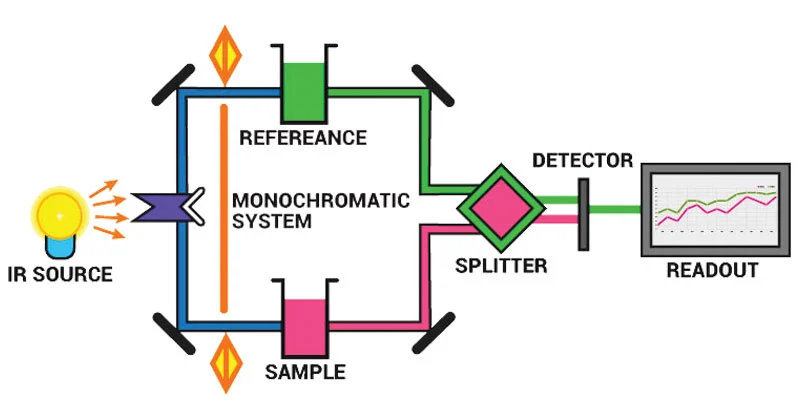
Infrared Spectroscopy (FTIR)
Fourier-transform infrared spectroscopy (FTIR), especially in ATR mode, enables rapid classification of pharmaceutical samples using multivariate statistical analysis. It is effective for distinguishing authentic products from fraudulent ones based on spectral differences.
Chromatographic Techniques
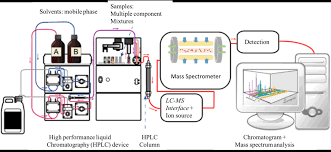
High-Performance Liquid Chromatography (HPLC)
HPLC remains a gold standard for drug analysis due to its high specificity and quantitative accuracy.
Limitations:
- Requires sample preparation
- Time-consuming compared to spectroscopic methods
However, advancements have enabled faster HPLC methods suitable for rapid screening in some field applications.
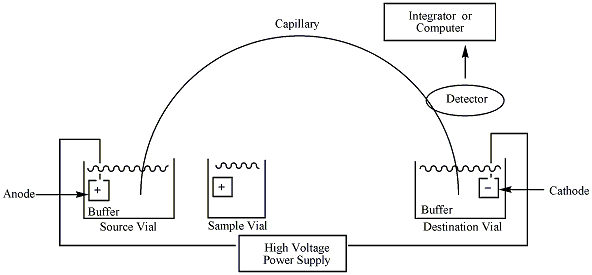
Capillary Electrophoresis (CE)
CE offers a cost-effective alternative for drug analysis and has demonstrated good performance in detecting commonly counterfeited drug classes such as antimalarials and anti-infectives.
Mass Spectrometry-Based Approaches
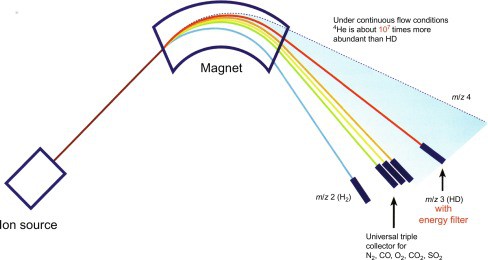
Isotope Ratio Mass Spectrometry (IRMS)
IRMS is used to determine the origin and authenticity of pharmaceutical compounds by analyzing stable isotope ratios.
Applications:
- Source tracing of APIs
- Detection of counterfeit production batches
- Linking counterfeit drugs to manufacturing sources
Ion Mobility Spectrometry (IMS) and IM-MS
IMS separates ions based on their mobility in a gas phase, allowing rapid identification of compounds.
When combined with mass spectrometry (IM-MS), it becomes a powerful analytical tool capable of detecting adulterants and counterfeit compounds in complex matrices such as herbal supplements.
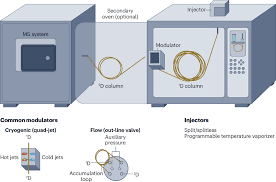
Gas Chromatography-Mass Spectrometry (GC-MS)
GC-MS is highly effective for identifying volatile compounds and detecting adulterants in pharmaceuticals and traditional medicines.
Advanced Ambient Ionization Techniques
Techniques such as DESI (Desorption Electrospray Ionization) and DART (Direct Analysis in Real Time) allow direct analysis of samples without preparation, making them ideal for rapid counterfeit drug screening.
Visual and Digital Authentication Technologies
Modern anti-counterfeiting strategies also include:
- Radio Frequency Identification (RFID) tags
- QR codes and 2D barcodes
- Holograms and optical security features
- Digital watermarking
Portable handheld devices enable real-time comparison of packaging and product features, providing an additional layer of verification.
Integrated Detection Strategies and Future Perspectives
The increasing complexity of counterfeit pharmaceuticals requires a multi-technology approach. No single method is sufficient to address all counterfeit scenarios.
Trends:
- Integration of rapid screening with confirmatory laboratory techniques
- Development of portable and field-deployable devices
- Expansion of spectral and chemical databases
- Increased use of chemometrics and machine learning
For example, combining NIR screening with confirmatory HPLC-MS analysis has proven effective in identifying counterfeit drugs even when packaging appears authentic.
Conclusion
The rise of sophisticated counterfeit pharmaceuticals represents a critical challenge to global public health. Rapid drug detection technologies, particularly spectroscopy-based methods, are transforming the way counterfeit drugs are identified and controlled.
While traditional analytical methods remain essential for validation, emerging rapid detection tools provide:
- Faster screening
- Field applicability
- Non-destructive analysis
- Improved accessibility
Future advancements will likely focus on data integration, portable systems, and global database sharing, enabling more efficient and coordinated efforts to combat counterfeit drugs worldwide.