
Introduction
Modern evolutionary biology is not only rooted in genetics and natural selection it has also been profoundly shaped by concepts borrowed from economics. Since the early influence of Thomas Malthus on Charles Darwin, scientists have increasingly interpreted biological systems through economic frameworks such as resource allocation, competition, and optimization.
Key theoretical developments including evolutionary game theory introduced by John Maynard Smith highlight how organisms behave strategically under constraints. However, one crucial concept remains relatively underexplored in evolutionary biology: risk management.
In both economic and biological systems, risk refers to uncertainty associated with potential loss, whether that loss involves financial assets or survival itself. While risk management is central to industries like insurance and finance, its evolutionary parallels are only beginning to be systematically analyzed.

Understanding Risk in Biological Systems
What Is Biological Risk?
In evolutionary terms, risk encompasses any factor that threatens survival or reproductive success. These risks can be:
- Environmental (climate extremes, wildfires)
- Biological (predation, parasitism, disease)
- Ecological (resource scarcity, competition)
Unlike engineered systems, organisms do not consciously manage risk. Instead, risk management strategies emerge through natural selection, shaped by historical survival pressures.

Core Risk Management Strategies in Evolution
Borrowing from economic theory, biological systems exhibit four major categories of risk management:
1. Risk Avoidance
Organisms may avoid high-risk environments or conditions:
- Migration to escape extreme climates
- Behavioral avoidance of predators
2. Loss Control
When risks cannot be avoided, organisms reduce their impact:
- Frequency reduction: Avoiding exposure (nocturnal activity)
- Severity reduction: Protective traits (shells, toxins)
- Diversification: Using multiple food sources to reduce dependency
3. Risk Retention
Some organisms tolerate risk but prepare for it:
- Food storage in animals
- Energy reserves in plants
- Dormancy mechanisms in microbes
4. Risk Transfer (Limited in Biology)
Unlike human systems (insurance), true risk transfer is rare in nature. However, partial analogs exist:
- Symbiotic relationships
- Cooperative group behaviors
Evolutionary Examples of Risk Management
Dietary Diversification
Species that consume varied food sources are less vulnerable to ecosystem fluctuations.
Migration
Seasonal migration reduces exposure to environmental extremes.
Dormancy and Storage
From bacterial spores to seed banks, organisms preserve survival potential during unfavorable conditions.
The Unique Nature of Rare but Catastrophic Risks
Not all risks are equal. Evolutionary biology distinguishes between:
- Frequent risks (predation)
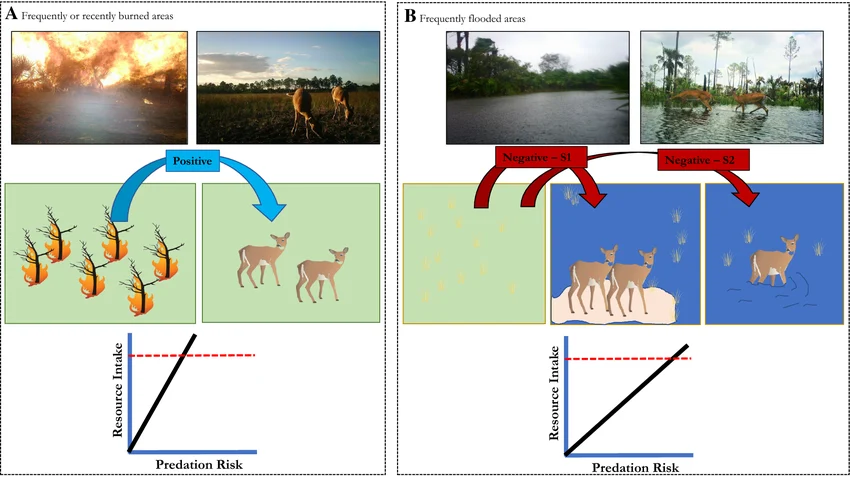
- Rare catastrophic risks ( wildfires, extreme stress events)
Rare risks are particularly important because:
- They can cause extinction or mass mortality
- They occur infrequently but with high impact
- They shape long-term evolutionary strategies
Real-World Example: Viral Survival Strategies
Certain viruses (bacteriophages) remain dormant within host cells but activate when the host is under stress. This “escape strategy” ensures survival during catastrophic events.
Mathematical Modeling of Risk in Evolution
To better understand how risk management evolves, scientists use simplified population models.
Growth Rate Under Risk
The growth rate of an organism can be expressed as:
r=b−(d+dr)r = b – (d + d_r)
Where:
- r = population growth rate
- b = birth rate
- d = normal death rate
- dᵣ = death rate due to catastrophic events
Organisms with lower dᵣ are better “risk managers,” but often at a cost (e.g., slower reproduction).
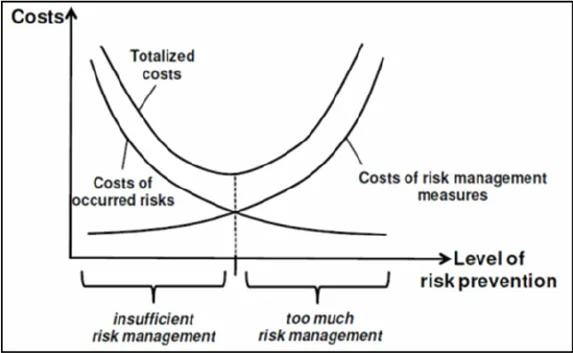
Trade-Offs: Cost vs Protection
Risk management traits are not free. They often involve:
- Slower growth rates
- Energy investment in protective mechanisms
- Reduced reproductive efficiency
Evolution favors these traits only when the survival benefit outweighs the cost.
Population Size and Risk Evolution
One key insight from evolutionary models:
- Large populations can evolve protection against even extremely rare risks
- Small populations are dominated by randomness (genetic drift), making adaptation less predictable
This means that even rare catastrophic events can shape evolution if enough individuals are affected over time.
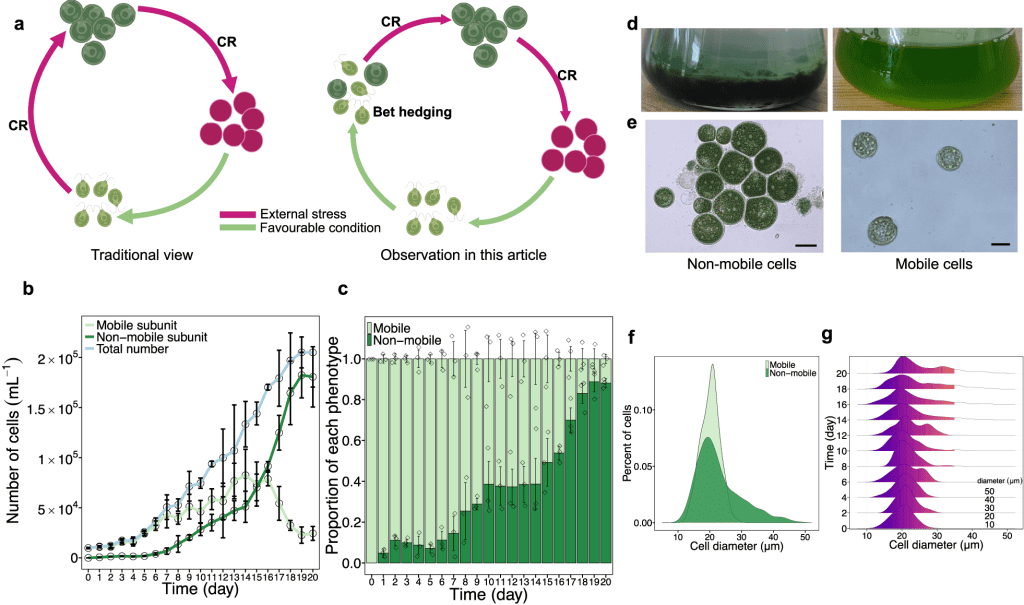
Bet-Hedging
A central concept in evolutionary risk management is bet-hedging.
Instead of maximizing short-term success, organisms:
- Reduce variability in survival
- Maintain stable performance across changing environments
For example:
- Producing seeds with different germination times
- Maintaining metabolic flexibility in microbes
Genome as a “Memory” of Risk
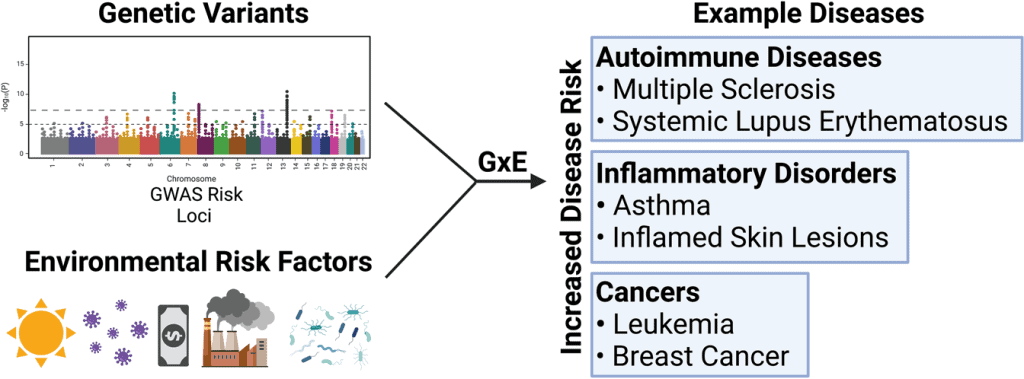
One of the most fascinating insights is that genomes may act as archives of past environmental risks.
Many genes that seem unnecessary in stable environments may actually:
- Protect against rare conditions
- Reflect past evolutionary pressures
This explains why:
- Microbial genomes contain “redundant” genes
- Some traits persist despite apparent lack of usefulness
Case Study: Microbial Metabolic Diversity
Microorganisms often retain the ability to metabolize multiple substrates even if rarely used.
Why?
- Rare environmental shifts may suddenly make a specific substrate essential
- Losing that ability could be catastrophic
Thus, metabolic diversity acts as a long-term risk management strategy.
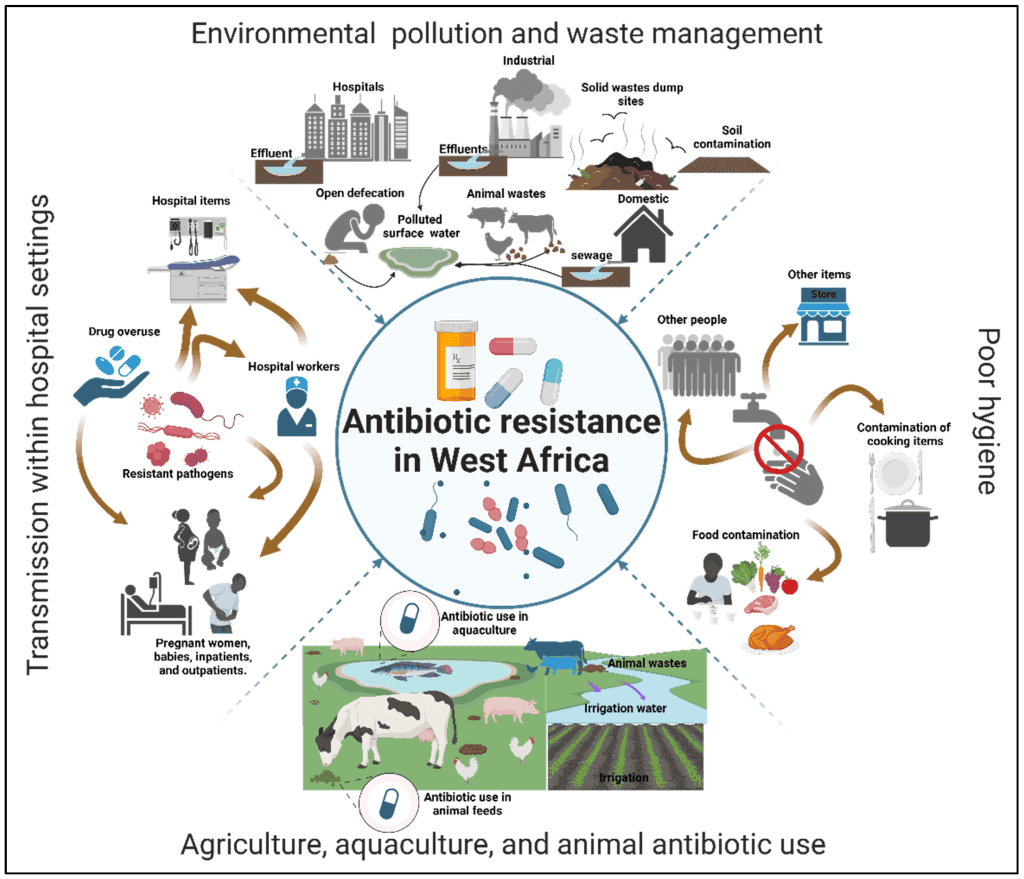
Antibiotic Resistance as Risk Management
From a bacterial perspective, antibiotic resistance is not just a medical issue it’s an evolutionary strategy.
- Resistance genes may persist even without antibiotics
- Some acquire compensatory mutations reducing their cost
- This allows bacteria to remain prepared for future threats
Extreme Evolutionary
1: Individual-Level Risk
- Catastrophic events affect individuals independently
- Selection favors traits reducing personal risk
2: Population-Level Risk
- Entire populations may go extinct
- Survival depends on at least a few resistant individuals
In the long run, populations with better risk management strategies dominate.
Complex Risk Management Traits
Some adaptations are highly complex and involve many genes:
- Bacterial sporulation (hundreds of genes)
- Plant fire-resistance mechanisms
- Flood tolerance systems in vegetation
These traits evolve when:
- Risks are severe
- Events occur often enough across evolutionary time
Takeaways
- Risk is a fundamental but underexpled driver of evolution
- Organisms evolve strategies analogous to economic risk management
- Rare catastrophic events can strongly shape genetic systems
- Trade-offs between survival and reproduction determine evolutionary outcomes
- Genomes may encode a long-term “memory” of environmental uncertainty
Conclusion
Understanding risk management in evolution provides powerful insights into:
- Why organisms retain seemingly unnecessary traits
- How populations survive extreme environmental changes
- The hidden logic behind genetic diversity
As genomic data continues to expand, integrating risk theory with evolutionary biology will help scientists reconstruct the environmental history of life—and better predict how organisms will respond to future challenges.